
Electricity Forum Intelligent Power Today Magazine Arc Flash Clothing

Utility Automation & Monitoring


Cloud Computing for Electric Utilities

Need-to-know info for electric utilities BY LEN WHITTEN, SunGard Availability Services The electric power industry has often been a first-mover in adopting new technologies before other industries move forward with implementation. For example, electric utilities were among the first companies to...

Respecting Customer Privacy

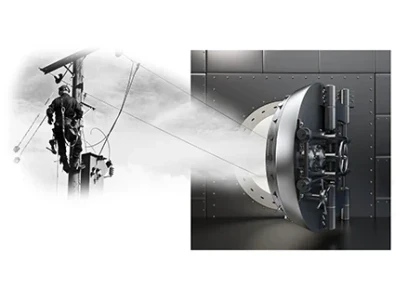
Achieving the gold standard in data protection for the Smart Grid BY ANN CAVOUKIAN, Ryerson University’s Privacy and Big Data Institute The increased amount of information that is collected, used, and analyzed by the Smart Grid brings with it additional privacy and security concerns which must be...

IT and OT Technologies for the Smart Grid

Convergence of information and operation technologies (IT & OT) to build a successful Smart Grid BY RICK NICHOLSON, Ventyx Smart Grid is a buzzword that has become an intrinsic part of the North American electric utility industry language in the past few years. Nearly every participant in the...

Utility Automation & Monitoring

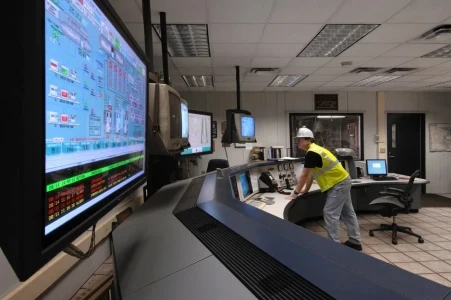
Trends in SCADA Security

The importance of up-to-date critical system monitoring

BY MARLEE ROSEN, Rosen Associates

Supervisory control and data acquisition (SCADA) networks contain computers and applications that perform critical capabilities in delivering essential services and commodities (for example, electricity, natural gas, water, waste treatment, wind farms, transportation) to consumers. As such, they are part of America’s critical infrastructure and require protection from a variety of threats that exist in cyber space and even more commonly today, the mentality that “if it isn’t broken then don’t fix it”.

To optimize the collection and analysis of the data and control of equipment such as pumps and valves from remote locations, SCADA networks provide great efficiency and are widely used but many have been set up roughly 15 years ago and left to run without any further concern for product updates or enhancements.

MITIGATE RISK
These legacy SCADAs present a tremendous security risk. SCADAs were initially designed to maximize functionality and automate processes, product updates and new revisions. However, SCADA companies merged, ceased to exist or evolved more into manufacturing execution systems (MES). Also, tremendous changes have occurred in the automation industry that have left multitudes of outdated SCADAs in the field. As a result,...

Related Articles


IT and OT Technologies for the Smart Grid

Convergence of information and operation technologies (IT & OT) to build a successful Smart Grid BY RICK NICHOLSON, Ventyx Smart Grid is a buzzword that has become an intrinsic part of the North American electric utility industry language in the past few years. Nearly every participant in the...

RTU and HMI Redundancy in Electrical Substations

As the substation RTU takes on more applications, such as Human-Machine-Interface (HMI), alarm annunciation, math & logic and “relay communication processing”, its need for high availability increases. Anything that takes the RTU out of service – configuration change, firmware update, or...

Transforming power grids for an efficient future

With a fast-growing global population and increasing levels of industrialization, demand for electricity is expected to soar 60 percent between now and 2040. That means power grids will be called on to transmit more power, more efficiently. And to do so, they’ll have to adapt to an evolving...

Moving Smart Grid to the Field

Ben Franklin famously said, “If you fail to plan, you’re planning to fail”. This saying certainly holds true for Smart Grid deployments, which can cost utilities several hundred million dollars. Given these high stakes, effective planning is essential. Many North American electric utilities...


Smart Substations and Their Role in the Evolving Smart Grid

The power industry is undergoing a profound transformation driven by grid modernization, renewable integration, and increasing demands for resilience and efficiency. At the heart of this evolution lies the smart substation—a next-generation facility equipped with advanced sensors, digital...

FERC Complaint Targets Duke, PJM Transmission Planning

A coalition of large energy consumers and ratepayer advocates has filed a complaint with the Federal Energy Regulatory Commission (FERC), urging the agency to prohibit transmission owners from independently planning "local" transmission projects exceeding 100 kilovolts (kV). The coalition argues...

Texas PUC Shelves $1B Grid Credit Mechanism

The Public Utility Commission of Texas (PUCT) has unanimously decided to shelve the proposed $1 billion Performance Credit Mechanism (PCM) for power generators, concluding that it would not deliver the anticipated grid reliability benefits. The PCM was conceived as a means to incentivize power...

FERC Rejects PJM Transmission Planning Change

The Federal Energy Regulatory Commission (FERC) has rejected a proposal from PJM Interconnection, one of the United States' largest regional transmission organizations, to alter its transmission planning protocol. The decision represents a significant victory for state regulators who had expressed...

magazine_sep_oct_2023_article_2

FERC Approves Interconnection for Talen Energy, Amazon Data Center

In a significant move that underscores the growing demand for reliable and sustainable energy to power the expanding digital infrastructure, the Federal Energy Regulatory Commission (FERC) has approved an interconnection agreement between Talen Energy, Amazon Web Services (AWS), and Exelon. This...

RWE Expands Its Footprint with 450 MW of Battery Energy Storage in Texas

In a significant move for the renewable energy landscape, RWE, a leading global energy company, has announced the addition of 450 megawatts (MW) of battery energy storage capacity in Texas. This expansion underscores the growing importance of energy storage solutions in enhancing grid reliability...

Page 1 of 12